Commercial
Developers


Aqary Investment & Development Social Profiles:
Aqary Investment & Development © 2026. All rights reserved.
Terms & Conditions
Powered By

Commercial
Developers
Install Our App Today
Join our newsletter
We'll send you updates once per week
Aqary Investment & Development Social Profiles:
Aqary Investment & Development © 2026. All rights reserved.
Powered By

About
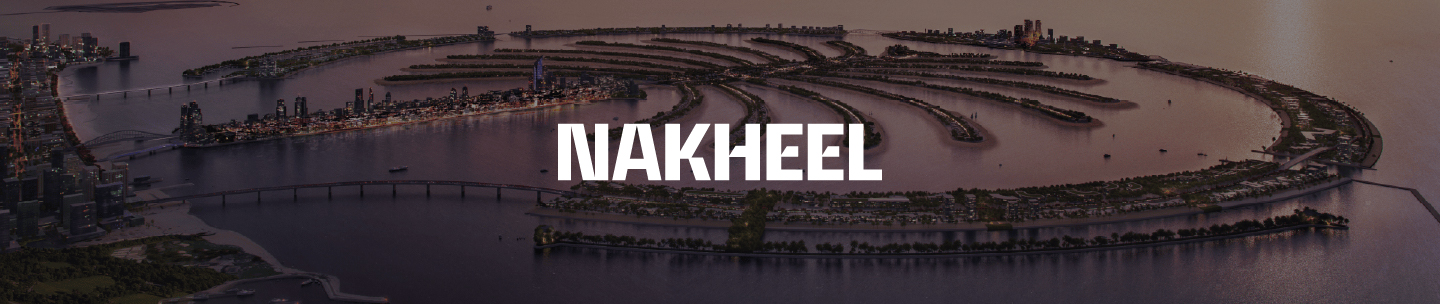
If you are researching real estate developers in the UAE, Nakheel is a name you will encounter almost immediately. The reach of the company across Dubai is very hard to miss, from the man made islands visible from space to the neighborhood malls where thousands of families shop every week. But what exactly is Nakheel? Who owns it, and what does it mean for you as a buyer, investor, or renter? This guide answers all of that.
Nakheel was founded in 2003 as a subsidiary of the government company Dubai World but operates as a private state owned enterprise. The name itself (نَـخٍـيْـل) in Arabic translates to "palm tree," which rather neatly describes the most recognized creation of the developer.
Nakheel was created under the directive of His Highness Sheikh Mohammed bin Rashid Al Maktoum as part of his strategic vision for economic expansion. The company was not set up to simply build apartment blocks; it was designed to reshape the geography of Dubai entirely, and to a large extent, it did exactly that.
The early 2000s were a period of extraordinary plans in Dubai, and Nakheel was given one of the boldest briefs in modern property history: build islands where there was only sea. The Palm Jumeirah was the first result of that vision, and it changed how the world thought about what a city could be.
The ownership story of Nakheel has gone through several significant chapters. For most of its early life, it operated under Dubai World. Then came the 2008 global financial crisis. Nakheel prospered until the 2008 financial crisis led to a decline in the real estate market, putting Dubai World at risk of bankruptcy in 2009.
After write downs of real estate values and lower sales, Nakheel had a loss of AED 13.4 billion ($3.65 billion).
The situation became so serious that on 14 December 2009, neighboring Abu Dhabi invested $10 billion in Dubai, preventing the debt default of Nakheel, and in March 2010, the government of Dubai rescued Dubai World, providing $9.5 billion to help ensure Nakheel bondholders would be paid on time and in full. The restructuring that followed was massive, and Nakheel's new projects are now in talks.
And in 2011, the company undertook AED 59 billion ($16 billion) of debt restructuring, and on 6 July 2011, the board of directors of Dubai World announced that legal ownership of Nakheel would be transferred to the Government of Dubai. Recovery was slow but real. And in 2013, the ruler of Dubai approved US$898 million of funding for the company. By 2017, the company achieved a $1 billion net profit in nine months.
It delivered 1,200 units with 23,000 under construction. Then came the most recent, and perhaps most consequential, ownership shift. Under the directives of His Highness Sheikh Mohammed bin Rashid Al Maktoum, Nakheel and Meydan joined with Dubai Holding to sustain and advance growth through a unified and integrated vision that builds on gains and improves the global competitiveness of Dubai.
On 16 March 2024, Nakheel, along with Meydan, was merged into Dubai Holding and ceased to be a separate company. Sheikh Mohammed said the goal was "to create a more financially efficient entity, owning assets worth hundreds of billions and comprising global expertise across various sectors, to realise the Dubai Economic Agenda D33." Today, Sheikh Ahmed bin Saeed Al Maktoum serves as chairman, guiding its strategic direction during its integration into broader government-aligned real estate operations.
Before we start talking about the specific projects and sectors of the company, let us understand just how large the entire footprint of Nakheel is in the UAE.
Waterfront projects of Nakheel, including the world famous, award winning Palm Jumeirah, have added more than 300 kilometers to the original 70km coastline of Dubai. Master developments span 15,000 hectares, and nearly 700,000 people live in Nakheel communities. Its residential leasing portfolio features approximately 17,000 Nakheel Villas and apartments across Dubai. That is, in many ways, a city within a city.
Unlike what many people believe, Nakheel is not a single function company. It has and operates across several distinct business lines, each with its own portfolio.
This is the main engine of what Nakheel does. Nakheel develops thriving residential communities with excellent community amenities, including leisure and hospitality destinations, as well as some of the most popular shopping malls in Dubai, souks, and community retail centers. Current active residential projects include Palm Jebel Ali, Dubai Islands, Como Residences, District One Naya Residences, Palm Beach Towers, Lagoon Views, District One West, and Jebel Ali Village, among others.
Nakheel Malls, which is its retail arm, owns and operates six million square feet of retail space, featuring some of the most popular shopping malls, dining and entertainment destinations, and Nakheel Pavilions in Dubai, community shopping centers. Retail project developments include Ibn Battuta Mall, Dragon Mart 1 and 2, Golden Mile Galleria, Nakheel Mall, The Pointe, Deira Mall, Deira Islands Night Souk, Warsan Souk, The Circle Mall, and Nad Al Sheba Mall.
Nakheel Hospitality's portfolio comprises a range of hotels and resorts, from five star, luxury establishments to modest accommodation, as well as community clubs, restaurants, and lounges.
The hospitality portfolio of Nakheel includes The St. Regis Dubai, The Palm, Premier Inn Ibn Battuta Mall, Avani Ibn Battuta, Riu Dubai, and the Centara Mirage Beach Resort Dubai. That is, what people consider, a fairly widespread ultra-luxury on one end and business- and family friendly on the other.
This division handles the day to day running of communities, maintenance, security, shared facilities, and resident services. For renters and homeowners, this is the arm they interact with most frequently.
Nakheel Marine and Leisure has responsibility for the marine leisure-related projects, which include marinas and berthing services across the waterfront communities of Nakheel. Given how much of the company portfolio is built around the water, this division is arguably more relevant than it might first appear.
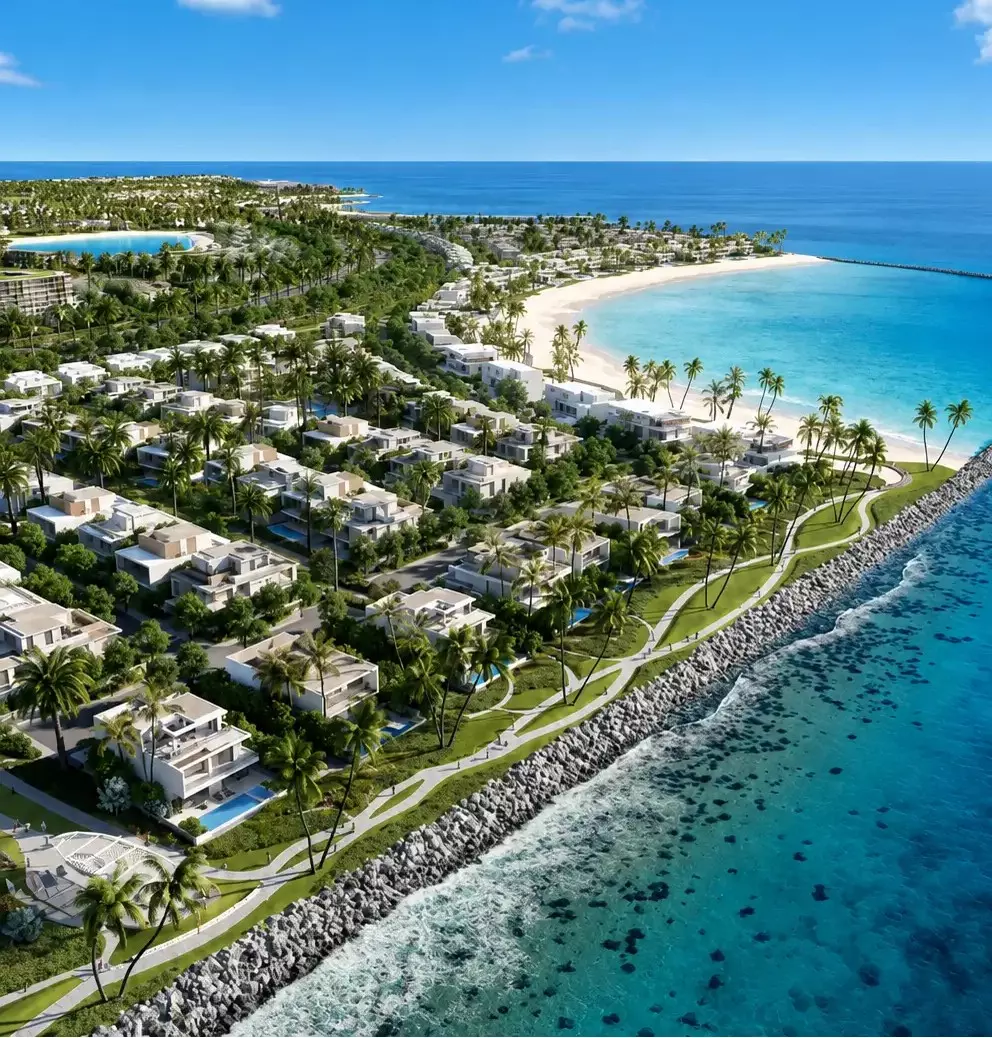
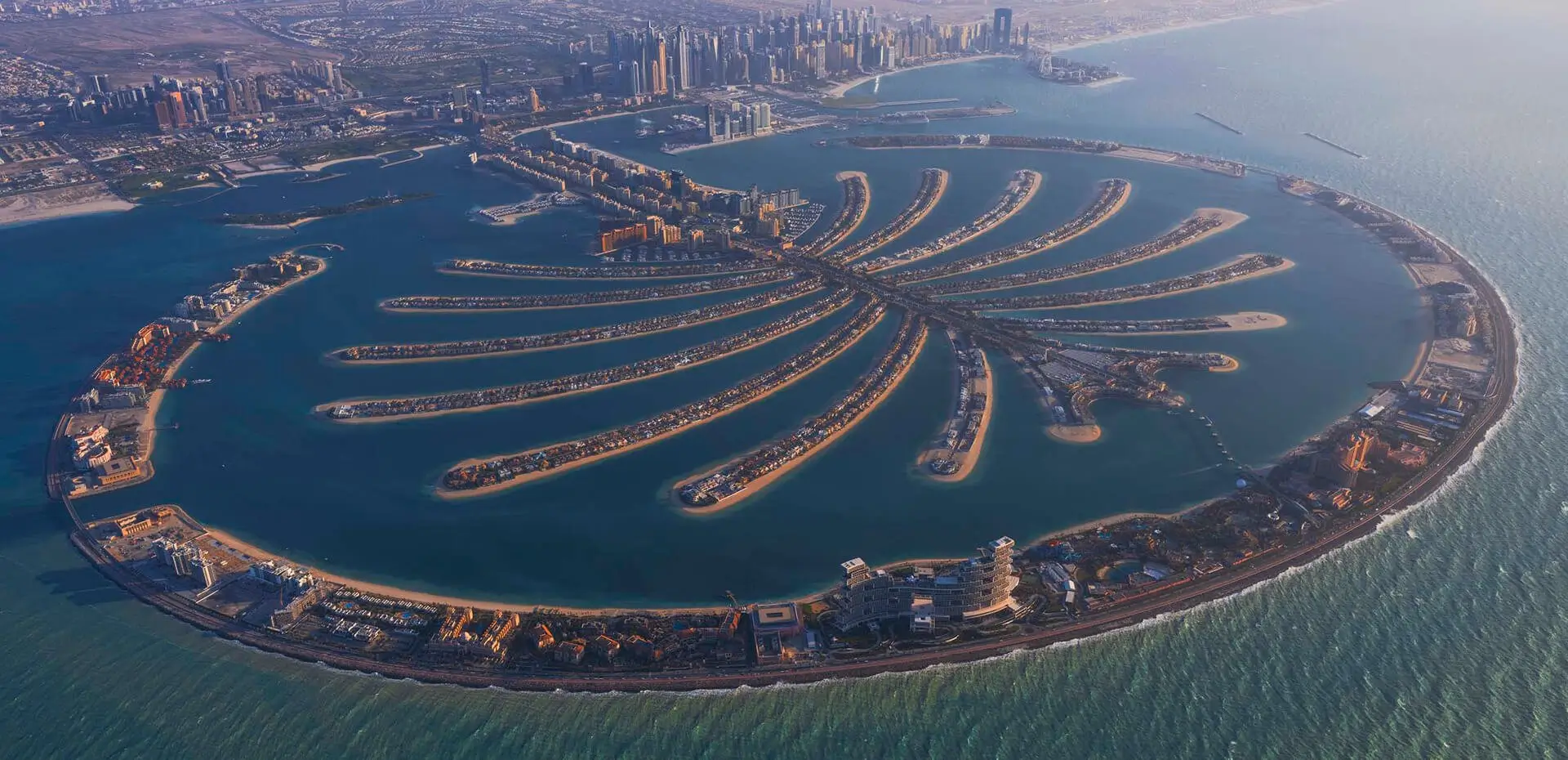
Palm Jumeirah is the defining achievement of Nakheel and arguably one of the most recognizable man-made structures. The Palm Jumeirah archipelago off the coast transformed an ordinary stretch of coastline into one of the most sought-after addresses in the world.
It has luxury villas, the iconic Atlantis resort, Nakheel Mall, and The Pointe, a waterfront dining and entertainment destination at the tip of the palm. Property values here have remained strong even through global downturns.
Palm Jebel Ali was conceived in 2002 as a successor to Palm Jumeirah and was designed to be 50% larger, with an extended trunk and more fronds. Early reclamation work began in October 2002 but halted amid the 2008 global financial crisis.
After a $4.6 billion debt restructuring deal, Nakheel relaunched Palm Jebel Ali, building 1,700 villas and 6,000 apartments on the islands. Nakheel recently awarded three major contracts, valued at more than AED 5 billion ($1.4 billion), to construct ultra luxury villas on its first six fronds.
Originally, the Dubai Islands were conceived as Palm Deira or Deira Islands, which would have been the largest of the palm islands, the project was then later scaled back and completely rebranded.
The Nakheel company restarted Palm Deira in the month of August 2022, renaming it again as Deira Islands, then again later as Dubai Islands, which is its current name. The current vision includes residential communities, hotels, beach access, and the Bay Villas and Bay Grove Residences as active launches.
The World Island covers an area equivalent to 9 square kilometers when it is fully linked by infrastructure. The islands were structurally complete by 2014, which enabled their private development.
Projects, such as the Heart of Europe district, are targeting completion in the mid 2020s. The World Islands is a collection of a total of 300 islands arranged to resemble a world map when viewed from above. This project is an audacious concept that has seen gradual, if slower than anticipated, development.
Other noteworthy projects of Nakheel Properties:
Several transactions and agreements have shaped the trajectory of Nakheel over the years:
According to data, Nakheel Properties has been reported to be the second largest property developer in Dubai after the giant Emaar Properties. That is a significant position in its own in a real estate market that includes serious players like Damac, Meraas, Aldar Properties (Abu Dhabi-based), and Sobha.
Where Nakheel differs from most of these competitors is in the scale of land ownership and the type of projects it undertakes. Emaar built Downtown Dubai and the Burj Khalifa area, a dense, commercial, and residential urban core. Nakheel built islands. The comparison is almost unfair because the two companies operate at different scales of geography and infrastructure.
Damac tends to target the luxury apartment segment with branded residences and hotel tie ins. Meraas, now also under Dubai Holding, built City Walk and Bluewaters Island, more lifestyle focused, mixed use destinations. Its communities, by comparison, tend to be broader, catering to families, long term residents, and investors who want not just a unit but an entire environment.
The Nakheel and Meydan merger is also expected to advance the goals of the Dubai Economic Agenda D33 plan, which aims to double the size of the Dubai economy with a target of reaching AED 32 trillion by 2033 and establishing the emirate among the top three global cities.
What the merger means practically for the market position is the consolidation of land banks. Holdings of Meydan, including the racecourse area and Mohammed Bin Rashid City, combined with Nakheel coastal assets, give Dubai Holding an enormous land portfolio that no private developer can easily match.
For Investors: Nakheel properties, particularly on Palm Jumeirah, Palm Jebel Ali, and the Dubai Islands, remain in demand. Government ownership means a degree of project continuity that privately held developers sometimes cannot guarantee. The revival of Palm Jebel Ali after a long pause is a good example: investors who held on eventually saw the significant new investment behind it.
For Buyers: The buyers who are looking at long-term residences, master communities of Nakheel, give something that standalone towers rarely do: a complete living environment. Communities, such as Al Furjan, Jumeirah Village Circle, and Jumeirah Park, were designed with schools, parks, retail, and transport access in mind. These are part of the original master plan.
For Renters: The renters, whether foreign nationals or native residents, particularly professional expatriates and families, find the breadth of Al Nakheel Villas useful. The renters can find a whole studio in the International City at one end of the budget spectrum or a luxury villa on the Palm Islands at the other. Very few developers in Dubai offer this type of range within a single portfolio.
Nakheel is not a typical property developer. It is a government-backed long-term master developer that has literally redrawn maps over the past two decades. That history, including the near collapse of 2009, gives the company a weight and institutional depth that matters when evaluating long-term real estate decisions.
The 2024 merger into Dubai Holding brought Nakheel Real Estate into an even larger structure alongside Jumeirah Group, Dubai Properties, TECOM Group, and Meydan. Their main objective is to develop a highly diversified conglomerate operating across real estate, tourism, hospitality, leisure, entertainment, and investments, in alignment with Dubai's broader 2040 Urban Master Plan.
Nakheel builds at a scale that few developers anywhere in the world attempt, within communities that are backed by the full weight of the Dubai government. Whether that makes a specific Nakheel property right for your needs depends on your budget, lifestyle, and investment horizon, but dismissing the company from your research would mean ignoring a very large portion of the residential map.
Location
Working Hours & Day
Working Hours
09:00 AM – 6:00 PM
Working Days
Monday - Saturday
Consultation with Our Expert

Meet Our Expert Real Estate Consultants
Guiding you to the best property decisions with market knowledge, insights, and personalized support.